A name with two lives
When I look at Brandon Avery Perlman, I see a person who lives between two spotlights. One is inherited, bright and public, tied to a well-known family name. The other is self-made, underground, and pulsing through clubs, records, and late-night rooms where the bassline matters more than the biography.
Brandon Avery Perlman is widely known in music under the name Delroy Edwards, a Los Angeles-based electronic artist and DJ whose sound feels like a cracked mirror reflecting dance music from a half-remembered past. His work has been described through the language of lo-fi house, raw techno, and rough-edged club experiments, but labels only tell part of the story. What stands out is his instinct for atmosphere. His tracks do not just play. They smolder. They hiss. They drift like smoke through an open warehouse door.
Born in 1990, he grew up in Los Angeles, a city where image and noise often fight for the same sidewalk. That setting matters. It helps explain why his work feels both sun-baked and nocturnal, as if it were made from the residue of a party that ended hours ago but still echoes in the walls.
The family he comes from
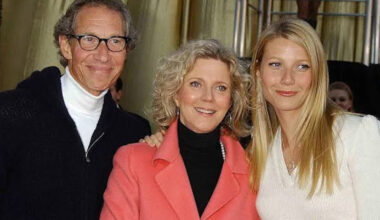
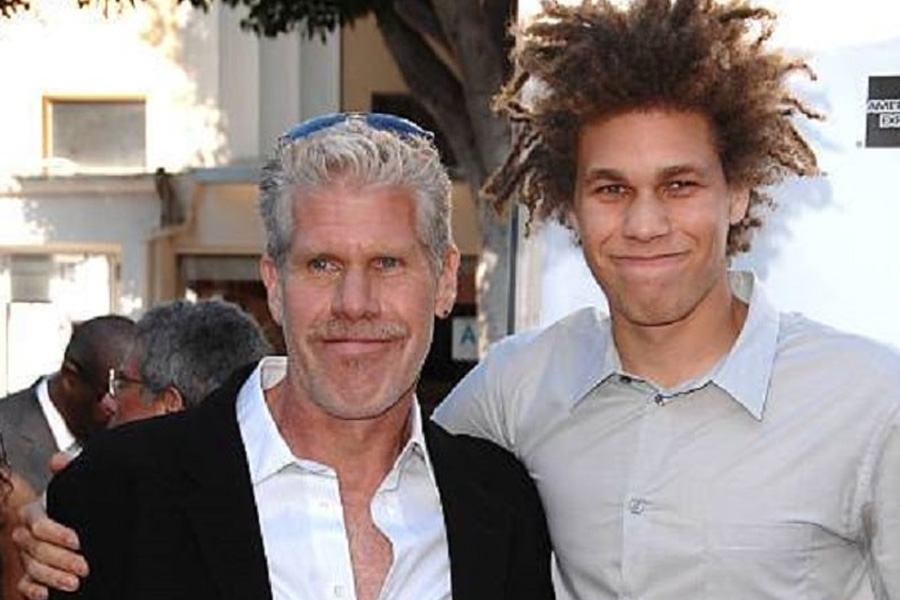
Brandon’s family helps him get fame outside of music. His father, Ron Perlman, was an actor with a distinct movie presence. Ron Perlman’s visage seems chiseled from stone and weather, which may explain his lengthy fame. Hollywood history does not overlook him. He’s a landmark.
Opal Perlman, a creative designer, is his mother. Her life is typically described as fashion and jewels, which makes sense. She creates pieces where a clasp, shape, or line can shift the mood. Style is not decoration in this family. It’s language.
Blake Perlman, Brandon’s sister, is an actress and voice actor. As the oldest sibling, her work adds to the Perlman saga. From the outside, the house seems like a performance, design, and art space. Such a setting can foster creativity. Everything grows faster there.
I think Brandon’s public persona should go beyond his family. His parents are Ron and Opal Perlman, and he is Blake’s brother. However, his career changed. His acting and fashion transitions were messy. He studied dance music’s gritty architecture, texture, rhythm, and sound.
From Los Angeles to the underground
Brandon’s career as Delroy Edwards began to form around the edges of the underground music scene. He spent time in New York, working at A1 Records and learning from a world where records are not just products but artifacts. Around age 18, he moved into that scene with a kind of hunger that is easy to miss if you only look at the family name. Hunger matters. It is the hidden engine in many artistic careers.
His first widely noted release, 4 Club Use Only, arrived in 2012. That title alone says a lot. It sounds like a warning label and an invitation at the same time. His music has continued in that spirit, often leaning into roughness instead of polish. The tracks can feel like they were pulled from a cassette deck that had seen too many nights and too few repairs. Yet that blemish is part of the beauty. It gives the music a pulse. It gives it fingerprints.
He later helped found L.A. Club Resource, a label that became a platform for his own sound and the sounds around him. That move is important because it shows he was not just making tracks. He was building a space. Labels are sometimes invisible to casual listeners, but they are the scaffolding of scenes. They create a local language. They keep the signal alive.
Delroy Edwards also became associated with other projects, collaborations, and releases that expanded his reputation. His work has appeared in different forms, including records, cassettes, club-focused cuts, and collaborative material. The music world often rewards consistency, but it also rewards identity, and his identity has remained sharp. Even when the sound shifts, the fingerprints stay.
A career built like a hidden room
The purposeful simplicity of Brandon’s career is what I like most. He has created work that whispers and is heard in a culture that often confuses volume with merit. His music is hidden behind a noisy door.
The practical side of his profession is easy to ignore. He was a DJ, producer, label creator, and atmosphere curator. Those are separate jobs. Multiple jobs are intertwined. They advise discipline, not inspiration. They also recommend viewing music as an ecosystem rather than a performance.
His accomplishments go beyond a single album or success. They spanned releases, club culture, label work, and live performances. Though tougher to summarize, that career is frequently more durable. Roots grow instead of pyrotechnics.
Recent visibility and public presence
Brandon’s recent public visibility continues through music events, festival appearances, releases, and social media mentions. His name appears in lineups, event listings, and posts connected to his DJ and live work. That tells me he is still active, still changing shape, still moving.
His social presence reflects a person who is known, but not overexposed. That balance is rare. It leaves room for mystery. In an era that often demands constant self-explanation, mystery can feel like a luxury. It can also be a strategy. People listen differently when they cannot instantly flatten an artist into a checklist.
The family as a frame, not a cage
The most interesting thing about Brandon Avery Perlman is how the family frame works around him. Ron Perlman gives the name weight. Opal Perlman gives it creative breadth. Blake Perlman adds another layer of artistic continuity. But Brandon’s work as Delroy Edwards stands on its own feet.
That independence matters. It means the family story is not the whole story. It is the frame around a separate canvas. And that canvas is full of texture, repetition, grit, and invention. His music does not sound inherited. It sounds assembled.
I think that is why his biography is compelling. It is not just the story of a famous child. It is the story of someone who took a public name and gave it a private frequency. He turned inheritance into motion.
FAQ
Who is Brandon Avery Perlman?
Brandon Avery Perlman is a music artist and DJ best known as Delroy Edwards. He is associated with lo-fi house, techno, and underground club music, and he has built a career through releases, performances, and label work.
Who are Brandon Avery Perlman’s family members?
His father is Ron Perlman, his mother is Opal Perlman, and his sister is Blake Perlman. They are all connected to creative fields in different ways.
What does Brandon Avery Perlman do professionally?
He works in electronic music as a producer, DJ, and label founder. His public artistic identity centers on the name Delroy Edwards.
Why is Brandon Avery Perlman notable?
He is notable both for his family background and for his independent music career. His work has earned attention for its raw texture, underground style, and distinctive lo-fi club sound.
What kind of music is he known for?
He is known for lo-fi house, techno, and club-oriented electronic music with a rough, atmospheric edge. His sound often favors texture over shine and mood over polish.