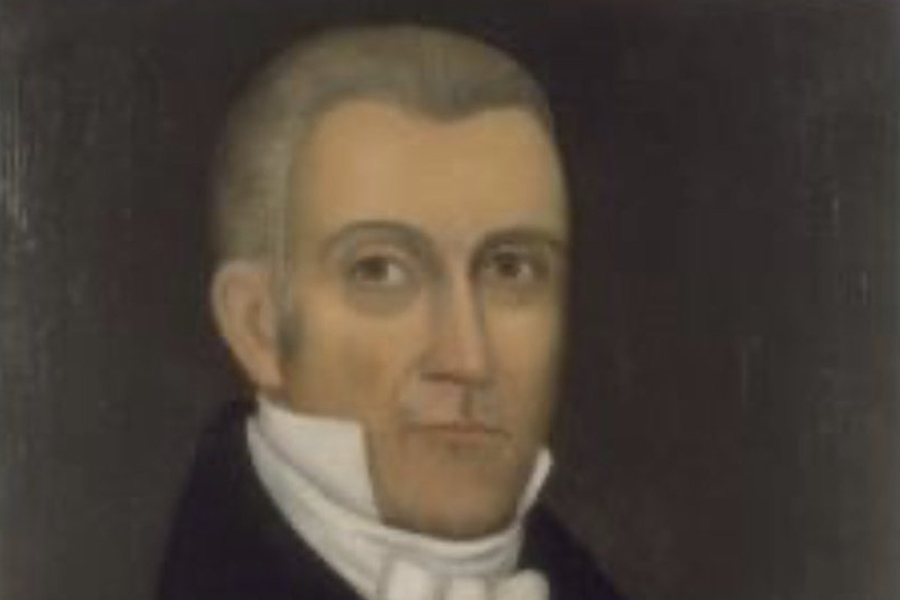
A Patriot Born Into a Powerful Household
I imagine Elihu Adams as a little figure in a grand American history doorway. On May 29, 1741, in Braintree, Massachusetts, he was born into a family that would shape American history. He was the youngest son of John Adams Sr. and Susanna Boylston Adams and the younger brother of John Adams, the second US president. He had another sibling, Peter Boylston Adams. Family was more than a household. A living current carried discipline, learning, faith, land, labor, and public obligation.
Farms, church life, militia duties, and local politics molded Elihu’s colonial New England upbringing. In Braintree, subsequently Randolph, where he lived, reputation mattered and family name was both shield and burden. There, men were judged by their stability, service, and perseverance. It appears Elihu carried all three.
John Adams Sr. and Susanna Boylston Adams
John Adams Sr. was the center post of the family. He worked as a respected local figure and fathered sons who each left a mark in different ways. He was not a famous national statesman, but he was the kind of man who makes such statesmen possible. He helped anchor the family in property, faith, and civic duty. In a New England world, that was no small inheritance.
Susanna Boylston Adams gave the family its other half of strength. She came from the Boylston line and brought into the household the social and familial connections that linked the Adamses to another established colonial family. I see her as the quiet architect of a demanding home life, one where children were raised with a sharp sense of duty and a long memory. Elihu was one of her sons, and John Adams often remembered the family with tenderness that made the old household feel almost audible.
Together, John Adams Sr. and Susanna Boylston Adams produced a family tree that would stretch into public memory. Their children did not live in the shadow of history. They helped cast it.
Elihu Adams as Husband and Father
Elihu Adams married Thankful White on 20 September 1765. That marriage tied him to another colonial family and gave him a domestic life alongside the public one. Thankful White became a central part of his story. She was not merely a wife in the background. She was the person left to hold the household together when the Revolution turned local men into soldiers and left women to manage farms, children, debts, and uncertainty.
Together, Elihu and Thankful had children whose names appear in later family records. Their children included Susanna, John, and Elisha, and some genealogical records also list an infant Elihu who died young. These names matter because they show the human scale beneath the military record. Elihu was not only a captain. He was a father with a growing family, a man whose life was split between the hearth and the alarm drum.
Thankful’s later petition to manage the estate after his death reveals the practical burden she carried. She had to deal with land, debts, and property matters while raising children and preserving the family’s standing. That is one of the most human parts of this story. War does not only strike battlefields. It also enters kitchens, account books, and bedtime routines.
The Brothers in the Adams Family Orbit
The Adams family is primarily known for Elihu’s oldest brother, John. After becoming a central American statesman and president, he never forgot Elihu. John remembered Elihu, the younger brother who died bravely in the Revolution. Elihu is unique to the Adams family because of that recollection. Although he was not a public giant, he paid the price for giants to grow.
The second brother, Peter Boylston Adams, resided locally. History shows him as part of a family linked to land, work, and civic duty. I notice a colonial family pattern in the three brothers. One son becomes renowned, one stays local, and one connects them. Elihu is that midway flame, dazzling yet short-lived.
Military Service and Revolutionary Action
Elihu Adams entered the Revolution at a dangerous hour. On 19 April 1775, as alarm spread from Lexington and Concord, he marched from Braintree as a captain in Colonel Benjamin Lincoln’s company. That detail alone tells me something important. He was not dragged into action. He led men.
He also took part in the action at Grape Island off Weymouth in May 1775. This was one of those early war moments that may look small on a map but felt huge on the ground. A schooner, a landing, a company moving with urgency, the sense that everything was still up for grabs. Revolutionary life had the texture of wet rope, rough timber, and sudden fear.
After that, Elihu served at Cambridge during the siege of Boston, where he contracted dysentery. He died in August 1775, either on the 10th or 11th, while still in service. His death was not dramatic in the usual military sense. No cannon made the final mark. Disease did. That is often how armies are broken. Not always by steel, but by water, waste, and strain. Elihu’s death reminds me that the Revolution was fought not only with muskets but with worn bodies and exhausted lungs.
Land, Money, and Household Reality
Elihu relied on land and family wealth. He and Thankful sold a salt marsh piece to John Adams in 1769, demonstrating how closely relatives and economy were linked. Colonial families passed property around like stones.
Elihu’s wife appealed to sell estate property to pay debts. The portrait gains weight from such detail. Neither wealth nor governmental office distinguished him. Working colonial father, military commander, and landholding New Englander, his death left practical messes. That kind of history matters too. The grain under the glossy table.
A Family Remembered Through Memory and Records
What keeps Elihu Adams alive is not only his military role. It is the family pattern around him. John Adams Sr. gave him the name and inheritance of duty. Susanna Boylston Adams gave him the family line and domestic anchor. John Adams gave him historical memory. Thankful White gave him a marriage and children, and later carried the burden of his absence. His children carried the name onward. Together they form a compact but full portrait of colonial life.
I find that Elihu’s story works like a candle in a window. It is not the brightest flame in the house, but it tells you the whole house is alive. He stood at the edge of a revolution, served quickly, and died before he could build a long public career. Yet his life still opens a wider room, one filled with parents, brothers, wife, children, land, debt, and duty.
FAQ
Who was Elihu Adams?
Elihu Adams was an American Revolutionary era captain from Braintree, Massachusetts, born on 29 May 1741. He was the youngest son of John Adams Sr. and Susanna Boylston Adams, and the younger brother of John Adams. He died in August 1775 while serving near Boston.
Who were Elihu Adams’s family members?
His immediate family included his father John Adams Sr., his mother Susanna Boylston Adams, and his brothers John Adams and Peter Boylston Adams. His wife was Thankful White. Their children included Susanna, John, and Elisha, with some records also listing an infant Elihu.
What did Elihu Adams do during the Revolutionary War?
He served as a captain in the Massachusetts militia. He marched during the Lexington alarm on 19 April 1775, took part in the Grape Island action in May 1775, and later served at Cambridge during the siege of Boston.
How did Elihu Adams die?
He died of dysentery in August 1775 while in military service near Cambridge. His death came during the harsh camp conditions of the early Revolution, when disease was often deadlier than battle.
Why is Elihu Adams remembered?
He is remembered as part of the Adams family and as one of the early Revolutionary officers who answered the alarm in 1775. His story also matters because it shows the family, domestic, and military realities that shaped the era.
What happened to Thankful White after Elihu Adams died?
Thankful White Adams later married Aaron Hobart. She also dealt with Elihu’s estate and the practical responsibilities left behind after his death.
What is the historical significance of the Adams family in Elihu’s story?
The Adams family shows how one colonial household could shape American history across several generations. John Adams became a national leader, John Adams Sr. anchored the family locally, Susanna Boylston Adams sustained the home, and Elihu Adams gave his life in the first season of the Revolution.