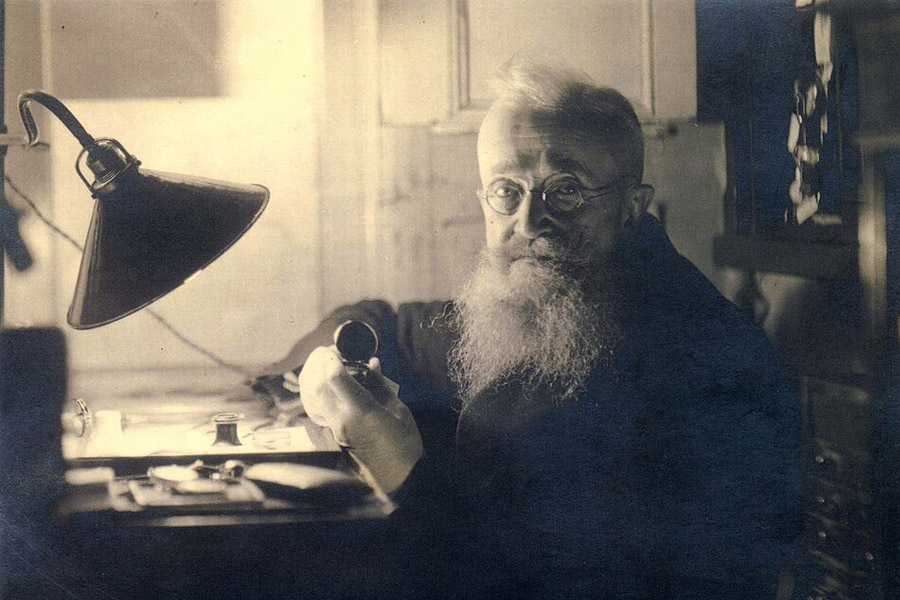
The man behind the famous family name
I don’t think Casper ten Boom pursued stardom. I see a watchmaker, parent, husband, and believer whose life proceeded steadily and deliberately, each section linked to the next. The stories of Corrie and Betsie ten Boom carry his name, but Casper is the center of that family like a watch’s main spring, little but powerful.
He was born in Haarlem in 1859 and lived through major changes in the Netherlands and Europe. His occupation was watchmaking and shop ownership. His calling was faith and service. He married Cornelia Johanna Arnolda Luitingh, had five children, and was the son of Willem ten Boom and Elisabeth Bell. The family watch shop was more than a business. It was a home, meeting place, and haven.
Casper married Cor in 1884. Faith and practicality shaped their marriage. They met in Sunday school and formed a home that changed history beyond their wildest dreams. Their children followed, each adding to the family saga. Betsie arrived 1885, Willem 1886, Hendrik Jan 1888, Nollie 1890, and Corrie 1892. Grief for one infant kid certainly enhanced the family’s feeling of mortality and need on God.
The family that grew around him
Casper’s family was not a shallow portrait hung on a wall. It was a living network of names, choices, and loyalties. His wife, Cornelia, was a vital partner in the household. She was not a background figure. She helped sustain the home, the shop, and the spiritual culture of the family. Together, they raised children who would each carry pieces of their parents into the world.
Betsie, the eldest daughter, remained unmarried and stayed closely bound to the home. She is often remembered as gentle, patient, and strong in quiet ways. Willem, the only son who survived childhood, later married Tine van Veen and had children of his own. His son Kik became one of the next generation touched by war and loss. Nollie married Flip van Woerden and had six children, extending the family line into another busy branch. Corrie, the youngest daughter, became the best known of the children, but not because she tried to become famous. She simply lived faithfully, and history noticed.
I think the house must have felt crowded in the best sense, full of voices, schedules, prayers, and daily labor. Even the aunts became part of the household. Cornelia’s sisters, Aunt Anna, Aunt Jans, and Aunt Bep, lived with the family at different points, adding another layer of support and companionship. This was not a family built around privacy. It was a family built around presence.
Casper also belonged to a larger inheritance. His father Willem had opened the watch shop in Haarlem decades earlier, and that business became both a livelihood and a symbol of continuity. The family’s long habit of prayer for the Jewish people and for Jerusalem shaped their moral imagination. That habit did not begin in wartime. It was already woven into their domestic rhythm, like thread through cloth.
Work, reputation, and the shape of daily life
Casper’s career was practical, but practical work can be sacred when it is done with patience and skill. As a watchmaker, he worked with tiny parts, gears, springs, and cases, all of them dependent on precision. A good watchmaker understands that one overlooked fragment can disrupt the whole. There is something fitting about that for Casper. He helped keep time in a literal sense, and he helped shape a family whose moral timing would one day matter greatly.
After marrying Cornelia, he lived for a time in Amsterdam, then returned to Haarlem after his father’s death and took over the family shop. The move was more than a business transfer. It was a passing of responsibility. He stepped into a role that linked him to the past while placing him in the middle of a new century.
His work achievements are not measured best in money or titles. They are measured in trust, stewardship, and the respect he earned. He was known not only as a craftsman but as a man who cared for the poor, engaged in social work, and treated Jewish neighbors with affection rather than suspicion. He was said to observe Jewish practices with genuine respect, and his home reflected that spirit. He did not merely admire his values. He lived them.
Then the war came, and the shape of his life sharpened into something severe.
The wartime house and the cost of conviction
Under German occupation, the Ten Boom home became more than a family home. It became a silent fortress, sanctuary, and hiding spot behind regular walls. At tremendous risk, Casper, Betsie, and Corrie joined the BeJe resistance group and brought in Jews and other fugitives. The family estimates 800 people benefited through their network, which is staggering. That figure significant, but I keep coming back to the smaller image—the hidden room, the delicate opening, the family doing risky good in a chilly world.
War pressure peaked when Casper was 80. Age didn’t change his beliefs. It may have explained them. Although offered release due to his age, he continued working. I learn a lot from that denial. Principle outlived comfort. Apparently, he realized morality is not decorative. It costs.
On February 28, 1944, the family was betrayed and detained. Casper, Betsie, Corrie, Willem, Nollie, etc. disappeared. A family was scattered into jails, camps, and grief. Betsie died in Ravensbrück, Casper died in March 1944, and Willem died from prison disease after the war. Once home to watches, tea, prayers, and discussions, the house now told a rescue and loss story.
The people around him, one by one
Willem ten Boom
Willem was Casper’s father, the founder of the watch shop tradition in Haarlem. He created the business foundation that Casper later inherited. He also established the spiritual habits that shaped the family for generations.
Elisabeth Bell
Elisabeth was Casper’s mother, Willem’s second wife. She is part of the family line that carried the shop, the faith, and the household into Casper’s generation.
Cornelia Johanna Arnolda Luitingh
Cornelia was Casper’s wife and the mother of his children. She shared his life, his home, and his convictions. Together they formed the center of the household.
Betsie ten Boom
Betsie was the eldest daughter. She remained unmarried and became one of the most beloved figures in the family narrative for her gentleness and steadfastness.
Willem ten Boom
Willem was the son and only surviving boy. He married, had children, and carried the family line into the next generation.
Hendrik Jan ten Boom
Hendrik Jan was the infant son who died young. His brief life is a reminder that family stories contain both joy and ache.
Arnolda Johanna ten Boom, or Nollie
Nollie married and had six children. She extended the family beyond Haarlem and into another generation of descendants.
Cornelia Arnolda Johanna ten Boom, or Corrie
Corrie was the youngest daughter and later the best known of Casper’s children. Her life became a witness that carried the family name across the world.
Kik ten Boom
Kik was a grandchild through Willem’s line, one of the next generation touched by the family’s wartime legacy and suffering.
FAQ
Who was Casper ten Boom?
He was a Haarlem watchmaker, father of five children, husband of Cornelia, and a Dutch Christian known for sheltering Jews during World War II.
Why is Casper ten Boom remembered?
He is remembered for his courage, his family life, his faith, and his role in the rescue work carried out from the ten Boom home during the Nazi occupation.
Who were Casper ten Boom’s children?
His children were Betsie, Willem, Hendrik Jan, Nollie, and Corrie.
What was Casper ten Boom’s occupation?
He was a watchmaker and shop owner in Haarlem.
Did Casper ten Boom have grandchildren?
Yes. His family line continued through his children, including grandchildren such as Kik ten Boom.
What happened to Casper ten Boom during the war?
He was arrested with members of his family in 1944 after their home was discovered by the authorities. He died shortly afterward.
What kind of person was Casper ten Boom?
I would describe him as steady, principled, and deeply committed to both family and faith. He seems to have lived with the calm strength of an old clock, built to endure pressure and still keep time.