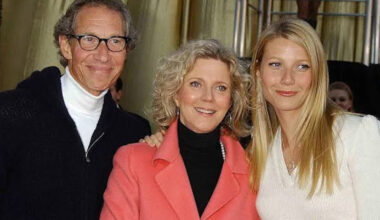
Mollie Ann Evans in the Family Story
I think of Mollie Ann Evans as the kind of woman who could stand at the center of a family without needing a spotlight. Her life, as publicly described through the stories of her daughter Judy Greer, feels both grounded and unusual, like a house built on ordinary materials that somehow became extraordinary. She is known most broadly as Judy Greer’s mother, but that simple label hides a far richer picture.
Mollie Ann Evans was born Mollie Ann Greer and came from Carey, Ohio, into a large Catholic family with seven siblings. That detail alone gives her story a certain rhythm. A crowded home can be noisy, demanding, and full of friction, but it can also create a sharp sense of belonging. In Mollie’s case, family seems to have been both anchor and engine. She grew up among brothers and sisters, and that upbringing shaped the way she moved through life, with discipline, faith, and a strong sense of duty.
Her early years were marked by hardship as well as formation. At age 11, she was shot in the chest by her four-year-old brother in a hunting accident and survived. That event reads like a crack of thunder in an otherwise rural childhood. For many people, such a moment would become only trauma. For Mollie, it appears to have helped point her toward nursing, as if the wound opened a door rather than closing one.
From Convent Life to Nursing Life
One of the most striking parts of Mollie Ann Evans’s biography is her time in a convent. She spent eight years there before leaving prior to final vows. That is not a small detour. It suggests a young woman with deep religious commitment, serious discipline, and perhaps a restless mind that needed a different kind of vocation. A convent can feel like a riverbank, shaping the current of a life, but eventually she stepped out and chose another path.
After leaving the convent, she entered nursing school. I see that decision as practical and poetic at once. Nursing is a profession built on attention, stamina, and compassion. It asks a person to be steady in emergencies and gentle in routine moments. Mollie appears to have made that work her own. She later worked as a nurse after marrying Rich Evans, and her career eventually expanded beyond bedside care. She was promoted to run her hospital unit, returned to school for a master’s degree, began a PhD, and later earned a second master’s degree in hospice care. That is a long arc of learning, a ladder built one rung at a time.
Her career later included hospice nursing, and she has also been described as a hospital administrator. Together, those roles paint a portrait of a woman who did not stop growing after adulthood began. She kept studying. She kept moving. She kept changing shape without losing her center.
Rich Evans and the Marriage That Shaped the Home
Mollie’s marriage to Rich Evans is a major part of the family story. Rich is publicly described as a mechanical engineer, and Judy Greer has portrayed him as the steadier and more change-averse half of the household. That contrast matters. Some marriages work because two people are identical. Others work because they balance each other like opposite poles on a compass.
According to the public family story, Mollie and Rich were introduced on a blind date and wrote to each other for two years before fully building their life together. That kind of beginning feels old-fashioned in the best sense. It suggests patience, interest, and a slow unfolding rather than an instant spark. Their relationship seems to have formed the emotional climate in which Judy Greer grew up.
I read their marriage as a blend of motion and stability. Mollie appears to have had the more adventurous spirit, while Rich offered a grounding force. That combination can create a home that feels like both a workshop and a sanctuary.
Judy Greer as the Child at the Center
Judy Greer, Mollie Ann Evans’s daughter, is the family’s most prominent figure. Judy Greer was born Judith Therese Evans, but she changed her stage name because her birth surname was already popular in entertainment. That change is little on paper but big in practice. This is when a family name became a professional identity.
Judy’s loving, clear recollections of her mother show how close they were. Mollie is eccentric, deeply religious, ambitious, and full of surprises, she says. Judy’s acting and writing enthusiasm may come from such combo. Children often inherit traits, habits, and a life outlook. Mollie seems to have instilled perseverance, curiosity, and self-direction.
Judy was special in the Evans family as an only child. No sibling bonds or childhood chorus surrounded her. That can strengthen parent-child bonds, and this one appears to have been strong. Mollie was prominent. In the room, she was powerful.
Mollie Ann Evans’s Siblings and Extended Family
Mollie came from a large sibling group, and that is important to understanding her. Publicly available material identifies seven siblings in her family, with names including John G. Jr. Greer, Deanna Greer, Susanne Greer, Thomas E. Greer, and Judith R. Greer. One sibling is not clearly named in the material I have, so I would treat the family list as partly complete rather than fully settled.
What matters most is the pattern. A house with eight children is a living system, a kind of small republic with its own rules, alliances, and storms. Mollie’s closeness to her living siblings suggests that those early ties endured. Family memory often outlasts family noise. In many ways, siblings become the first archive of a person’s life.
Her parents, John Adam Greer and Elizabeth Myers, belong to that earlier generation that shaped her moral and cultural world. Their names connect Mollie to a longer family line rooted in midwestern Catholic life, a world of labor, faith, and obligation. She was not born into celebrity. She was born into inheritance, in the plain and powerful sense of the word.
The Shape of Her Personal Life
I regard Mollie Ann Evans as a woman who had many identities without becoming flat. She was a daughter. A sister. Convent member. A nurse. A hospital boss. A repeat student. A wife. A mother. Each role adds layers, but they don’t stack like boxes. Weather fronts overlap.
Reinvention is also her narrative. She did not stay in one lane or consider education ended. She returned to school after career advancement. Later in life, she earned more degrees. She went from nursing to leadership to hospice care, which requires medical expertise and emotional endurance. That trajectory implies someone who believed life should keep opening.
Family Influence and Public Memory
Mollie Ann Evans is not a household name in the usual celebrity sense, yet her influence is visible through the public identity of her daughter. Judy Greer’s memoir-like reflections preserve a version of Mollie that is vivid, intimate, and layered. She comes across as a woman with iron in her spine and warmth in her hands. She could discipline, comfort, teach, and surprise.
I find that family histories often work like hidden wiring in a wall. You may not see them every day, but they power the room. Mollie’s life seems to have shaped Judy’s sense of humor, resilience, and independence. Her home appears to have been a place where Catholic duty met personal rebellion, where structure met improvisation, where seriousness coexisted with a streak of mischief.
FAQ
Who is Mollie Ann Evans?
Mollie Ann Evans is publicly known as Judy Greer’s mother. She is also described as a nurse, hospital administrator, and former nun whose life included extensive education and a long family history.
Who was Mollie Ann Evans married to?
She was married to Rich Evans, a mechanical engineer. Their relationship began with a blind date and grew over time through letters and shared life experience.
How many children did Mollie Ann Evans have?
She had one publicly known child, Judy Greer.
What is known about Mollie Ann Evans’s siblings?
She came from a large family with seven siblings. Publicly named siblings include John G. Jr. Greer, Deanna Greer, Susanne Greer, Thomas E. Greer, and Judith R. Greer.
What kind of work did Mollie Ann Evans do?
She worked in nursing, served in hospital leadership, and later worked in hospice care. Her career also included advanced study, including a master’s degree and work toward a PhD.
Did Mollie Ann Evans live a religious life?
Yes. She spent eight years in a convent before leaving and later pursuing nursing and healthcare work.
What made Mollie Ann Evans’s story distinctive?
Her story combines faith, survival, education, family loyalty, and career growth. She moved through life with the quiet force of someone shaping a river rather than just floating downstream.