A Father Rooted in Trentino
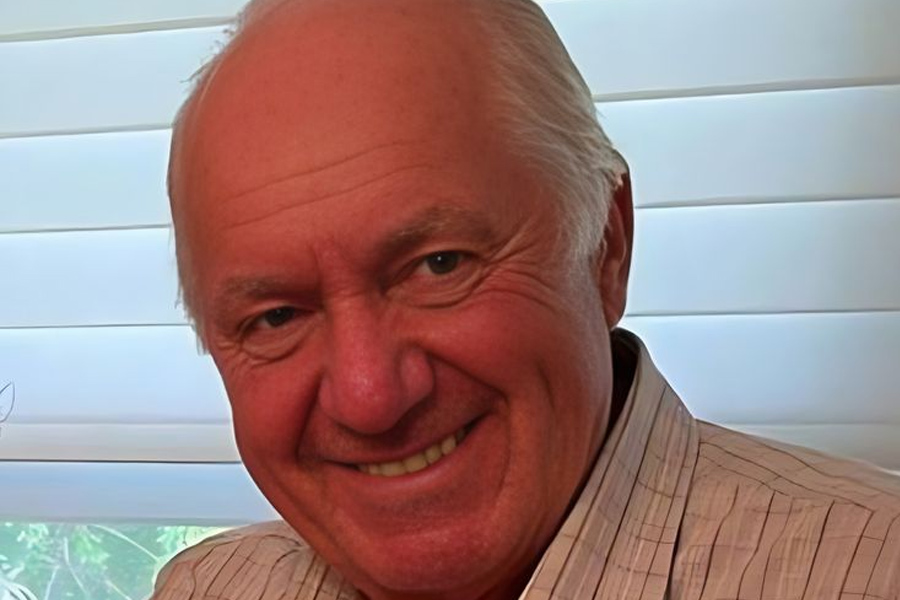
When I trace the life of Pierino Facinelli, I do not find a noisy public figure or a glossy celebrity biography. I find something sturdier. I find the architecture of a family. His story begins in Trentino, northern Italy, where he was born on April 16, 1940. That date matters because it places him in a generation shaped by war, movement, and hard choices. His early life belonged to a world of mountain air, local customs, and deep family ties, and those roots never seem to have left him.
He came to the United States on April 7, 1958, still young, carrying the weight that immigrants often carry in silence. That move was not only a change of address. It was a bridge thrown across an ocean. He eventually built a life in New York, first in Brooklyn and later in Queens, where many Italian American families carved out their place through work, discipline, and stubborn hope. In Pierino’s case, the record points to a man who worked as a waiter and took on other jobs to keep the household steady. That kind of labor can look plain from a distance, but it is often the steel beam holding up an entire home.
Bruna Reich Facinelli, the Household, and the Shape of Daily Life
Pierino and Bruna Reich Facinelli were the family’s core. Her Trentino hometown of Spormaggiore gives the family story a regional feel. Both parents brought Italian heritage to America, which appears to have survived in memory, identity, food, language, and family pride. In such households, the past is not a museum. A carefully stated surname, bread on the table, and a timely anecdote.
From what I can see, Pierino and Bruna reared their children to value effort and fortitude. Family life was not meant for public display. It was designed for adverse weather. Father worked hard. A mother kept the home together. This balance is frequent in immigrant households, although each family sets its own pace. That routine feels stable, practical, and full of expectation in the Facinelli home.
Peter Facinelli, the Most Visible Child
The best known member of Pierino’s immediate family is his son, Peter Facinelli, born on November 26, 1973 in Queens. Peter later became an actor and producer, and his public career gave Pierino’s name a place in entertainment reporting and family profiles. In that sense, Peter became the visible branch of a tree whose roots had already been growing for decades.
I see Peter’s career as one of the clearest expressions of Pierino’s influence, even if that influence was indirect. A child does not become a public artist by accident alone. He is shaped by the atmosphere he grows up in. In this case, that atmosphere was likely one of sacrifice, discipline, and family identity. Peter has spoken in various ways about growing up in a household with three sisters and a father who worked hard to support the family. That kind of upbringing leaves a mark. It gives a person a sense that work is not just a task. It is a form of devotion.
Peter’s public life also helped preserve the family narrative around Pierino. Through Peter’s interviews, appearances, and family references, I can see the father reflected back from the son like light from a window at dusk. The father may not have sought attention, but the son’s visibility gave the family story a longer echo.
The Sisters and the Private Side of the Household
Peter has said that he grew up with three sisters. Their names have been mentioned inconsistently in public references, so I treat them carefully. Still, the presence of four children in the family suggests a busy, crowded, energetic home. That matters. Large sibling groups create their own weather. There are alliances, rivalries, jokes, discipline, and shared memories that stay with a family longer than any single event.
Even without a full public record for each sister, I can still say the family was not small or quiet by nature. It was likely a household of movement, voices, schedules, and the constant demand that everyone contribute in some way. That kind of setting often produces people who know how to negotiate the world. It teaches patience. It teaches timing. It teaches how to stand in a room and still be heard.
The Grandchildren and the Continuation of the Line
Pierino’s family line continues through Peter’s children, who are Pierino’s grandchildren. They include Luca Bella Facinelli, Lola Ray Facinelli, Fiona Eve Facinelli, and Jack Cooper Facinelli. Each one represents a different chapter in the family’s American story.
Luca Bella Facinelli, born in 1997, has already had a public presence of her own. Lola Ray Facinelli, born in 2002, has drawn public attention for both health related and academic reasons. Fiona Eve Facinelli, born in 2006, appears to maintain a quieter profile. Jack Cooper Facinelli, born in 2022, is the newest thread in the family tapestry. Together, they show that Pierino’s story is not frozen in the past. It is still unfolding, generation by generation.
I think of the grandchildren as new branches rising from an old trunk. The trunk is Trentino, Brooklyn, Queens, labor, marriage, and family discipline. The branches are modern, American, and varied. Some are public, some private, but all remain attached to the same lineage.
Work, Money, and the Value of a Plain Life
Little evidence suggests Pierino Facinelli sought celebrity, financial success, or public wealth. That absence matters. Not all interesting lives appear in financial statements or headlines. Some lives are measured by hours, bills, and kids. Pierino’s career seems to have focused on waitressing and support work. He had no public brand. He established trust.
Life like that is rich. Though dull, it holds. A man who works six days a week to support his family invests daily. Even if the future is uncertain, he works. That’s a special achievement that shouldn’t be discounted because it’s ordinary. Foundations are often laid in the ordinary.
The Family Home and the Memory of Revò
One of the most striking parts of the Facinelli story is the continuing attachment to Revò in Trentino. Family roots there remain important, and the old home has been described as part of that inherited memory. A house like that is more than property. It is a container for identity. It absorbs generations. It holds voices long after the speakers are gone.
For a family spread between Italy and the United States, such a place functions almost like a compass needle. It points backward, but it also points inward. It tells the family who they are when the world gets loud. In Pierino’s case, that Italian homeland gives the family story depth. It keeps the narrative from becoming purely American in the shallow sense. It adds layers of geography, memory, and pride.
FAQ
Who is Pierino Facinelli?
Pierino Facinelli is an Italian-born family patriarch best known as the father of actor Peter Facinelli. He was born in Trentino, came to the United States in 1958, and built a life centered on work and family.
Who is Pierino Facinelli’s spouse?
His spouse is Bruna Reich Facinelli. She is part of the family’s Trentino roots and is closely tied to the household that raised Peter Facinelli and his siblings.
How many children does Pierino Facinelli have?
The public record clearly identifies Peter Facinelli as his son. Peter has also said he grew up with three sisters, which indicates a family of at least four children.
Who are Pierino Facinelli’s grandchildren?
His grandchildren include Luca Bella Facinelli, Lola Ray Facinelli, Fiona Eve Facinelli, and Jack Cooper Facinelli.
What is Pierino Facinelli known for besides being Peter Facinelli’s father?
He is known as an immigrant from Italy who worked hard, lived in New York, and supported his family through steady labor. His life reflects the quiet strength of many first generation parents.
Why does Pierino Facinelli’s story matter?
His story matters because it shows how a family is built from endurance, sacrifice, and memory. Before there is fame, there is often a parent working long hours and a home holding everything together.